Bronze
Award
The Wine Archive: Developed Through Time
Henry of Pelham
Canada
2026
Share:


To see entry media,
create an account
or
log in.
Logging in grants access to Advanced Search
and more Entry Details.
Entrant Company
Zulu Alpha Kilo
Entry Type
Product/Service
Launch Country
Canada
Program
Clio Awards 2026
Medium Type
Professional
Medium
Design Craft
Category
Art Direction
Strategy
Located in Niagara, Canada’s leading wine region, Henry of Pelham is one of Ontario’s best-selling producers and was named Ontario’s #1 winery at the 2024 National Wine Awards. Yet many wine lovers still dismiss Ontario wines as not world-class, equating “quality” with imported Old World bottles from Italy, France, or Spain.
The business challenge: Elevate perceptions of Henry of Pelham’s quality, proving it has the same care, craft, and heritage as any world-class wine, on a limited budget, and in a way that sparked conversation.
The insight: When people choose a wine, they’re buying more than taste. They’re buying history, place, and reputation. For centuries, Old World regions have turned heritage into a shorthand for quality, cues that matter as much as what’s in the glass.
Henry of Pelham had heritage in abundance. Founded in 1794, it represents 200+ years of winemaking across six generations of one family. The estate was deeded to the current owners’ great-great-great grandfather after the American Revolution; it housed some of Canada’s first vineyards, plus an inn and tavern.
So instead of focusing only on the liquid, the brand unlocked its greatest untapped asset: its own extraordinary history, targeting wine lovers, especially those who shape wine culture and conversation.
Execution
Henry of Pelham used its own wine to tell its story. Literally.
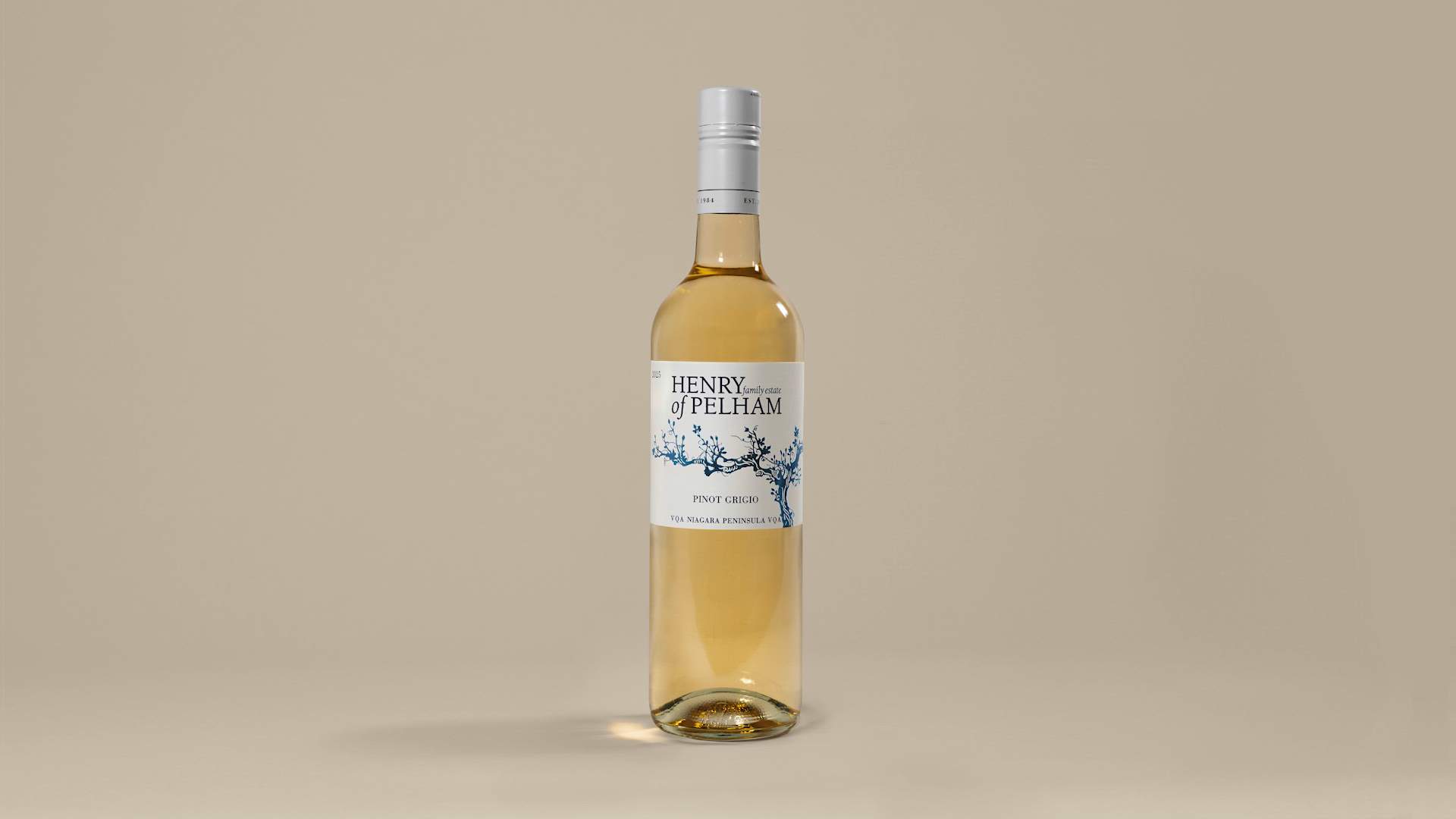
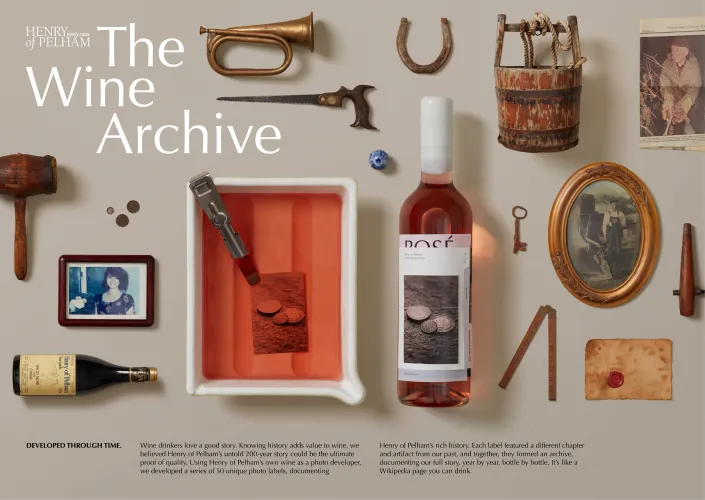
The Wine Archive: Developed Through Time is a limited-edition set of 50 handcrafted bottles featuring photographic labels developed with Henry of Pelham Pinot Grigio, Rosé, and Baco Noir. Each bottle spotlights a different artifact and story from its 200-year past, from a hand-built oven and mysterious glass eye to early packaging fails and long-lost keys.
Artifacts were shot on film, then developed using Wineol: an experimental process that replaces traditional developer with wine, infusing each image with the hue of the wine used to create it.
The label was made with the same obsession as the wine: four paper layers for a tactile “archive” feel, using cotton, vellum, recycled fiber, and soft-touch stocks, plus custom die-cut tabs, blind debossing, side-sewn binding, string ties, thermography, and etched glass. Each bottle was dipped in molten wax and hand-numbered: no shortcuts, just hands-on craft.
Credits
To see entry credits,
create an account
or
log in.
Logging in grants access to Advanced Search and more Entry Details.
Duplicate statues available now
Buy a Statue in
Design Craft
to Celebrate Your Team
Related Winners


Entrant Company
Grey Argentina
Medium Type
Professional
Medium
Public Relations
Category
Specific Target Audience
Launch Country
Argentina
Entrant Company
Publicis Conseil
Medium Type
Professional
Medium
Public Relations
Category
Cause Related
Launch Country
France
Entrant Company
DAVID THE AGENCY
Medium Type
Professional
Medium
Out of Home
Category
Billboard
Launch Country
Mexico
Fashion and Beauty
by David Gianatasio
by David Gianatasio
Fashion and Beauty
by Shahnaz Mahmud
by Shahnaz Mahmud
Culture and Creators
by T.L. Stanley
by T.L. Stanley
Fashion and Beauty
by Shahnaz Mahmud
by Shahnaz Mahmud