Silver
Award
KitKat Phone Break
Nestlé
Czechia
2026
Share:


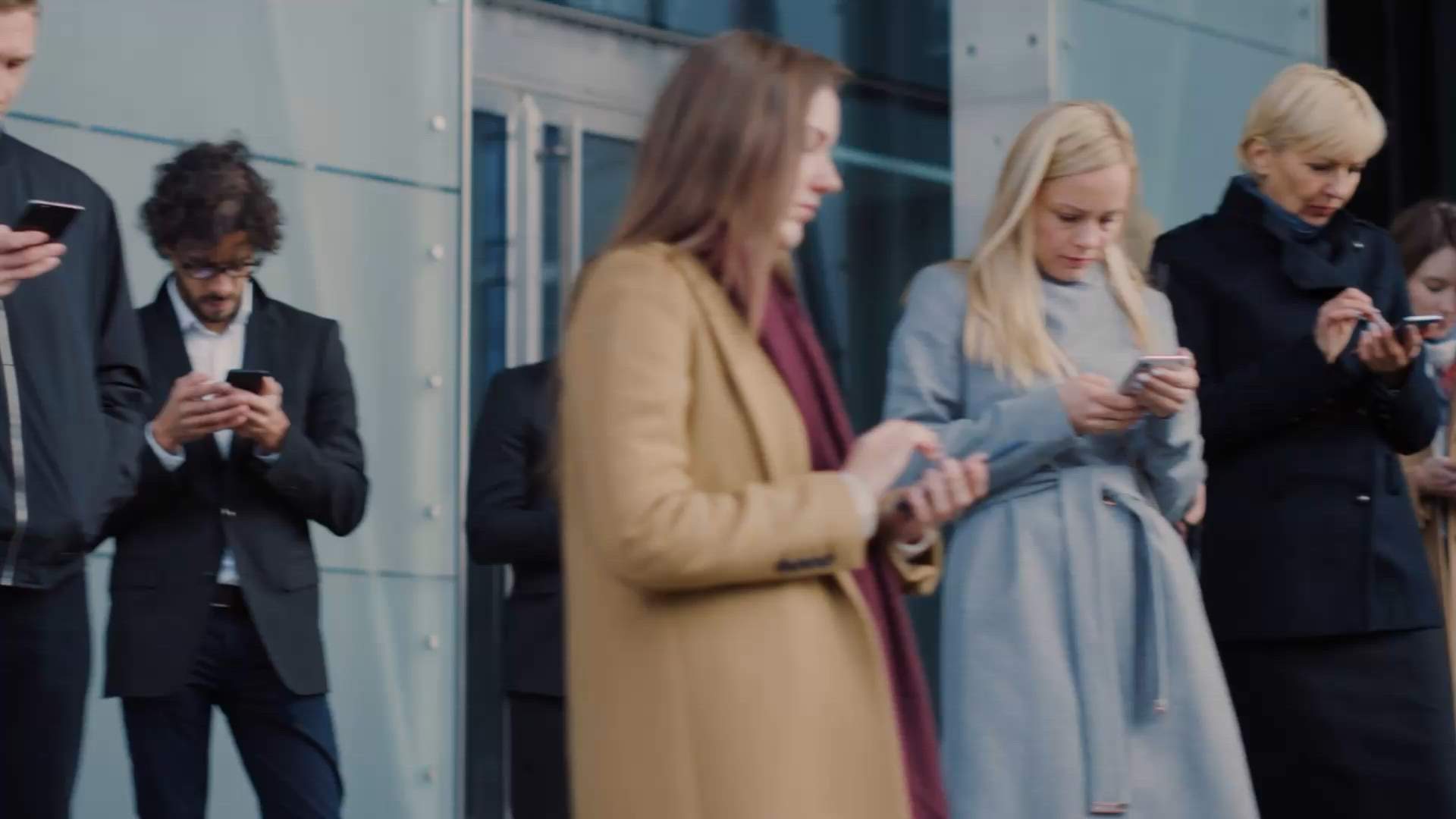
 KitKat Phone Break - Crowd...
 KitKat Phone Break - Street...
 KitKat Phone Break - Public Transport...
Entrant Company
VML Czechia
Entry Type
Product/Service
Launch Country
Czechia
Program
Clio Awards 2026
Medium Type
Professional
Medium
Print & Out of Home Craft
Category
Photography
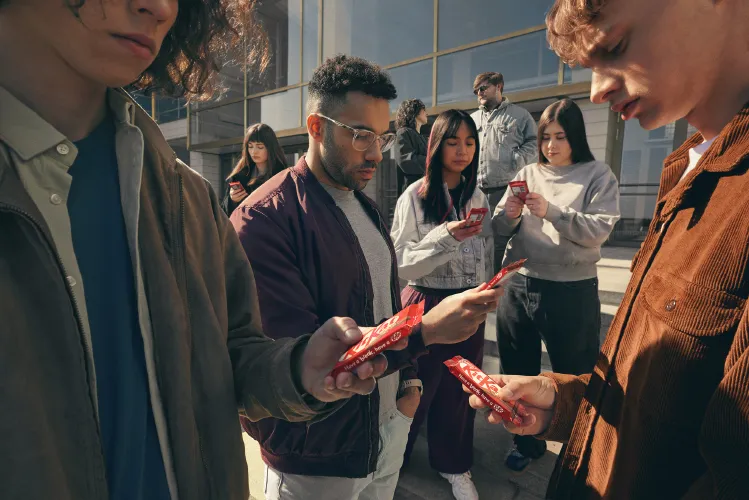
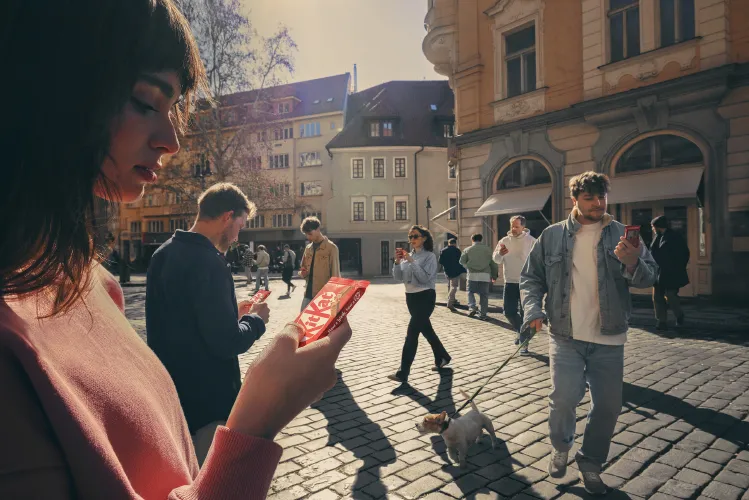
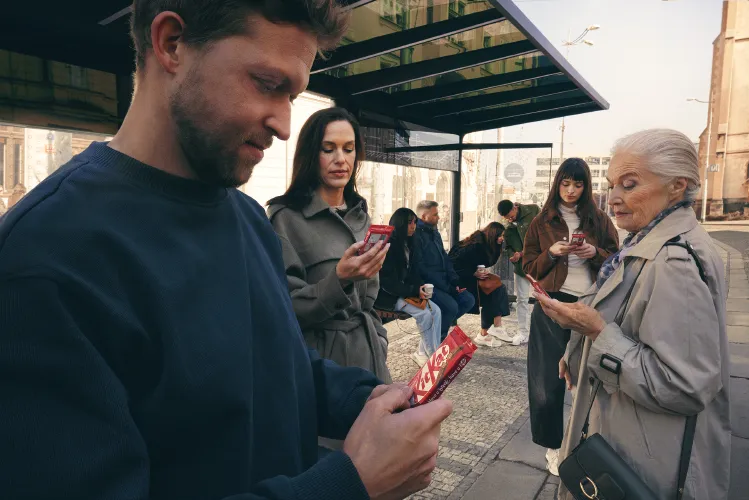
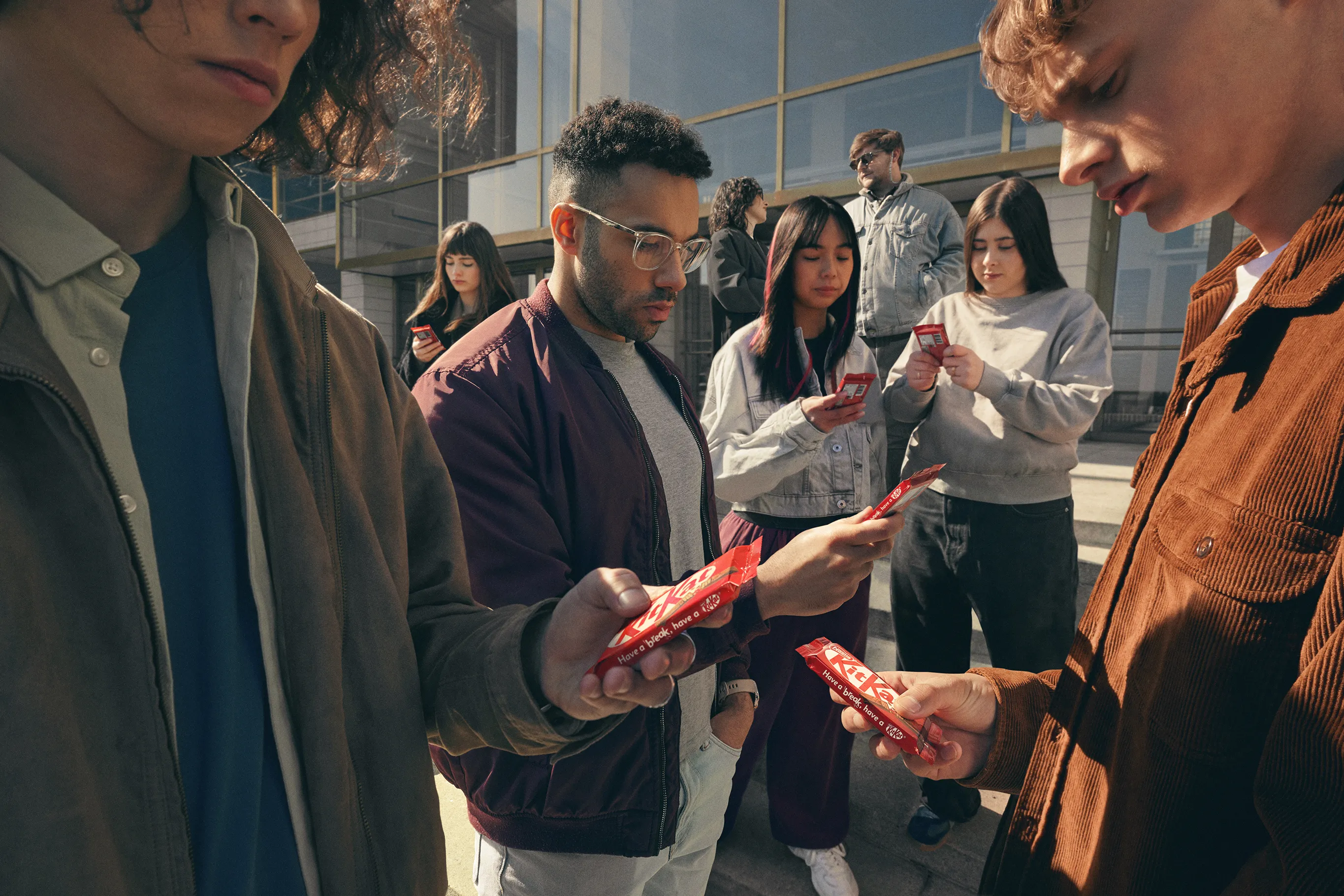
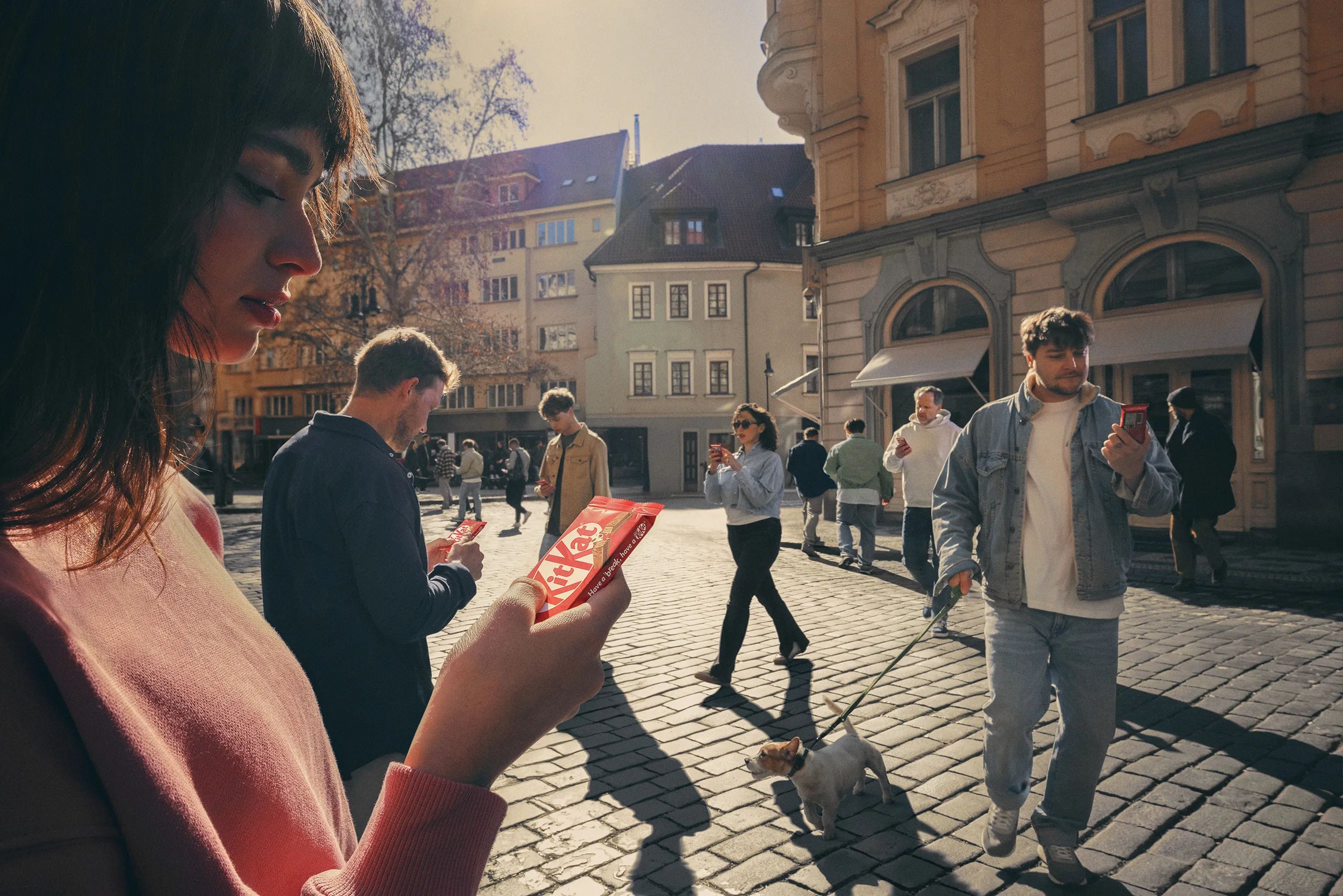
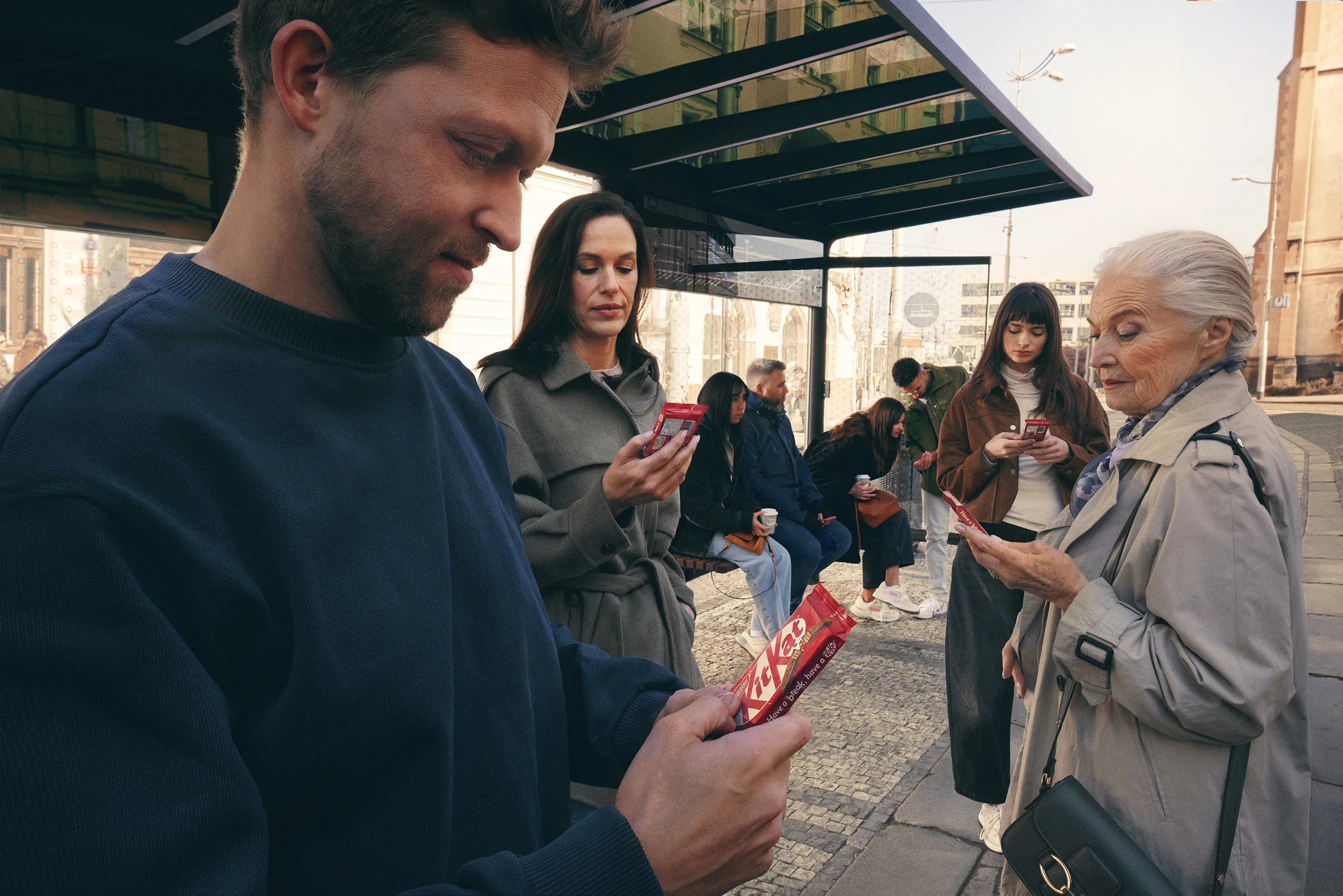
For over 65 years, "Have a Break, Have a KitKat" has been woven into pop culture. But for Gen Z, breaks have become just another form of screen time. KitKat's Phone Break campaign used photography to reflect that reality back - without saying a word.
The approach was documentary realism. We photographed everyday public moments - commuters waiting, pedestrians scrolling, friends together but distracted - and made one subtle swap: replaced their phones with KitKats. Same grip. Same posture. Shot in real environments with natural lighting and authentic styling, the images mirrored real life so closely they felt like candid street photography.
Then came the discipline: no logo, no headline, no call to action. Just the photograph. The image had to deliver the entire message on its own. Each gesture captured the screen trance we all recognize - head tilted, hand raised, body language detached. The KitKat replacement felt both seamless and silly, landing as absurd and familiar in equal measure.
Each execution was site-specific, photographed to echo the exact locations where it would appear: tram stops, plazas, walkways. The result? Passersby scrolling on their phones unknowingly mirrored the same pose as the photographs beside them. The recognition came not from exaggeration, but from quiet, honest observation.
The campaign earned global coverage (Muse by Clio, Adweek, Campaign Brief, LBB) reaching 2.63 million online. Industry leaders called it "a masterclass in marketing" and "the best example of the power of a 65-year-old tagline in action." It proved that photography, when used honestly and smartly, can make a timeless message feel urgent again.
Executions
KitKat Phone Break - Crowd
Photography
KitKat Phone Break - Street
Photography
KitKat Phone Break - Public Transport
Photography
Credits
Creative Agency
VML Czechia
Prague 7
Media Agency
Mindshare
Prague 7
Creative Agency
VML Czechia
Prague 7
Agency Network
VML
Kansas City
Holding Company
WPP
London
Production Company
Pavleye Artist Management And Production, s.r.o.
Prague
Chief Creative Officer
Jake Barrow
VML Czechia
Chief Executive Officer
Iva Welker
VML Czechia
Creative Director
Karla Calheiros
VML Czechia
Global Chief Creative Officer
Debbi Vandeven
VML
Global Chief Creative Officer
Rafa Pitanguy
VML
Chief Creative Officer
Jaime Mandelbaum
VML
Global Chief Creative Officer
Bas Korsten
VML EMEA
Account Director
Radim Stuchlik
VML Czechia
Copywriter
Johnny Gaponenko
Motion Designer
Arina Varenova
VML Czechia
Motion Designer
Soumik Babuya
VML Czechia
Account Manager
Aneta Jungvirt
VML Czechia
Creative Director
Wanslez Quaresma
VML Czechia
Photographer
Miro Minarovych
Pavleye Artist Management And Production, s.r.o.
Art Director
Carlos Paboudjian
VML Czechia
Executive Creative Director
Mauro Fardin
Copywriter
Helena Johnston
VML Czechia
Duplicate statues available now
Buy a Statue in
Print & Out of Home Craft
to Celebrate Your Team

Related Winners

Entrant Company
BBH
Medium Type
Professional
Medium
Branded Entertainment & Content
Category
Experience/Activation
Launch Country
United Kingdom

Entrant Company
BBH
Medium Type
Professional
Medium
Culture & Influence
Category
Cultural Communities
Launch Country
United Kingdom
Entrant Company
BBH
Medium Type
Professional
Medium
Culture & Influence
Category
Cultural Resonance
Launch Country
United Kingdom

Clio Awards
by Luz Corona
by Luz Corona
Ad of the Week
by David Gianatasio
by David Gianatasio

2 Minutes With
by Luz Corona
by Luz Corona