Gold
Award
NYESTALGIA
Biogen
United States
2026
Share:


To see entry media,
create an account
or
log in.
Logging in grants access to Advanced Search
and more Entry Details.
Entrant Company
21Grams
Entry Type
Direct-to-Consumer: Unbranded
Launch Country
United States
Program
Clio Health 2026
Program
Traditional Mediums
Advertiser Category
Pharmaceutical
Medium
Film Craft
Category
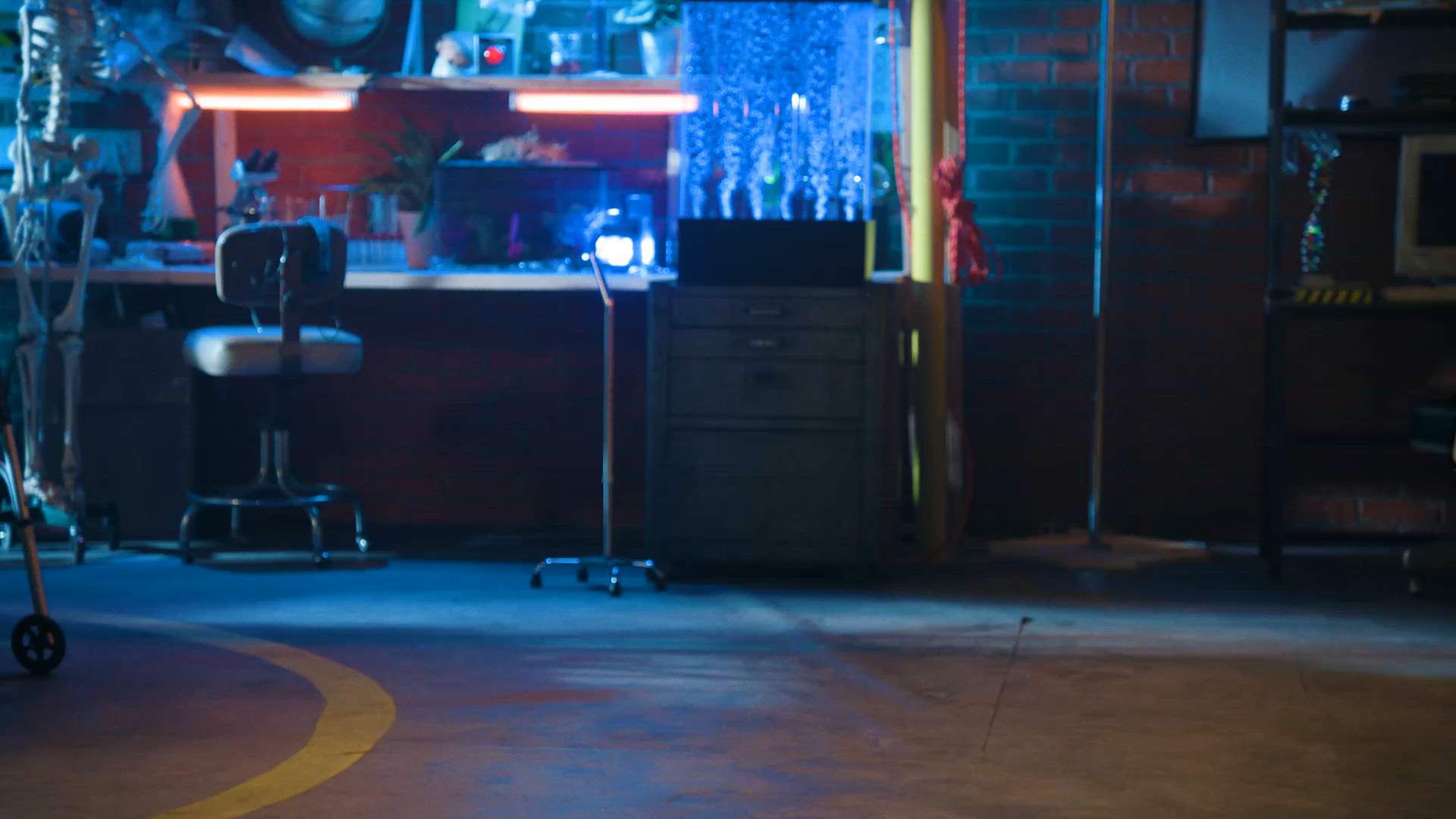
Production Design
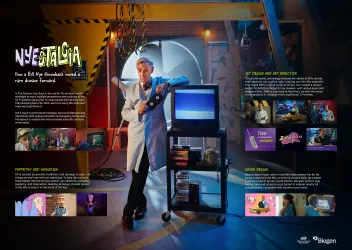
With vague early symptoms and a rare genetic marker that is only identifiable by a genetic test, Friedreich ataxia is often misdiagnosed. Available information was too clinical and overwhelming, and people weren’t absorbing it. But as a progressive and fatal disease, early diagnosis is key to getting patients the right care and maximizing their chances to live a better life. We needed a new approach to reach the broader population and find people who had been misdiagnosed or were experiencing symptoms they couldn’t understand.
In our research, we learned nostalgia activates the part of the brain linked to decision making, using emotional associations of the past to make new information feel relatable and safe. We realized that if we could take people back to a time when learning about complex topics was fun, we could help them retain information that may help extend their life.
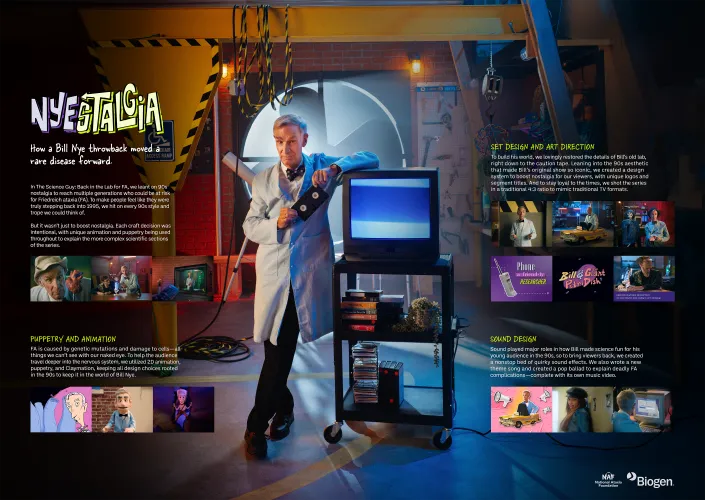
In the 90s, beloved science educator Bill Nye’s TV show, “The Science Guy,” taught millions of young Americans to love science, breaking down complex topics with lab experiments and sketch-style comedy. His fans span 3 generations, including both of our target audiences. So, when we learned that Bill himself carried the ataxia gene, we asked: what if we could use the nostalgia of Bill Nye to drive awareness of FA and the importance of genetic testing?
Premiering on International Ataxia Awareness Day, Bill stepped back in the lab for “The Science Guy: Back in the Lab for FA,” a 4-episode series inspired by his 90s TV show. Recreating the structure, style, and tone of the original series, Bill explored the science of FA and urge the audience to get tested. He had some help from some old friends, plus some new ones, including Christian, a young genetic researcher living with FA.
To amplify the nostalgia, the 90s was referenced throughout, using 2D animation, Claymation, Muppets-inspired puppetry to explain high-science topics like gene repeats and cardiomyopathy feel more engaging., We also wrote a 90s pop ballad to explain the effect of FA on the heart, as well as a new theme song drawing on 90s hip-hop.
Amplifying the 90s nostalgia, we used 2D animation, Claymation, and Muppets-inspired puppetry to make high-science topics like gene repeats and cardiomyopathy feel more engaging. We also wrote a 90s pop ballad (complete with its own music video) to explain the effect of FA on the heart, as well as a new theme song drawing on 90s hip-hop.
Credits
To see entry credits,
create an account
or
log in.
Logging in grants access to Advanced Search and more Entry Details.
Duplicate statues available now
Buy a Statue in
Film Craft
to Celebrate Your Team

Related Winners

Entrant Company
Klick Health
Traditional Mediums
Advertiser Category
Health Awareness & Advocacy
Medium
Film Craft
Launch Country
Canada
Entrant Company
Klick Health
Traditional Mediums
Advertiser Category
Health Awareness & Advocacy
Medium
Film Craft
Launch Country
Canada
Entrant Company
Klick Health
Traditional Mediums
Advertiser Category
Health Awareness & Advocacy
Medium
Film Craft
Launch Country
Canada
Film and TV
by David Gianatasio
by David Gianatasio
Gaming
by David Gianatasio
by David Gianatasio
2 Minutes With
by Shahnaz Mahmud
by Shahnaz Mahmud
Ad of the Week
by David Gianatasio
by David Gianatasio