Silver
Award
CHEER SIGNS
TOKYO METROPOLITAN GOVERNMENT
Japan
2026
Share:


To see entry media,
create an account
or
log in.
Logging in grants access to Advanced Search
and more Entry Details.
Entrant Company
TBWA\HAKUHODO
Entry Type
Teams, Leagues, Governing Bodies, & Associations
Launch Country
Japan
Program
Clio Sports 2026
Medium Type
Professional
Medium
Experiential/Activation
Category
Event/Activation
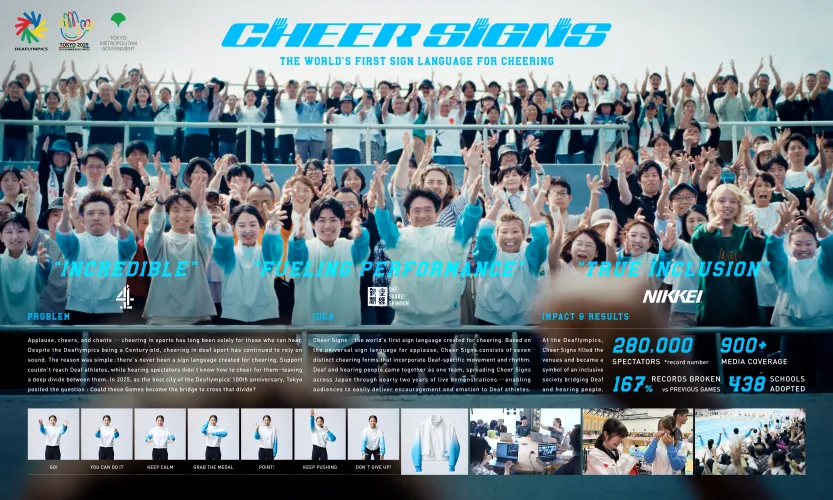
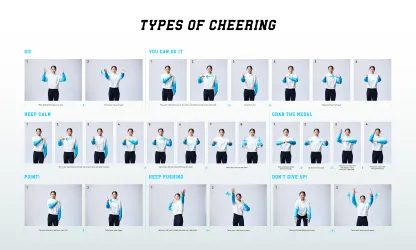
Applause, cheers, and chants―cheering in sports has long been solely for those who can hear. Despite the Deaflympics being a Century old, cheering in deaf sport has continued to rely on sound. The reason was simple: there’s never been a sign language created for cheering. Support couldn’t reach Deaf athletes, while hearing spectators didn’t know how to cheer for them, leaving a deep divide between them.
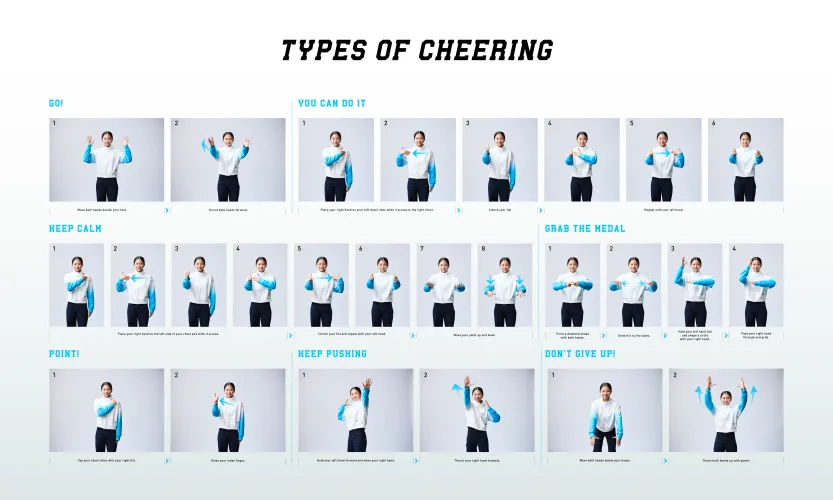
Cheer Signs ― the world’s first sign language created for cheering.
Based on the universal sign language for applause, Cheer Signs consists of seven distinct cheering forms that incorporate Deaf-specific movement and rhythm.
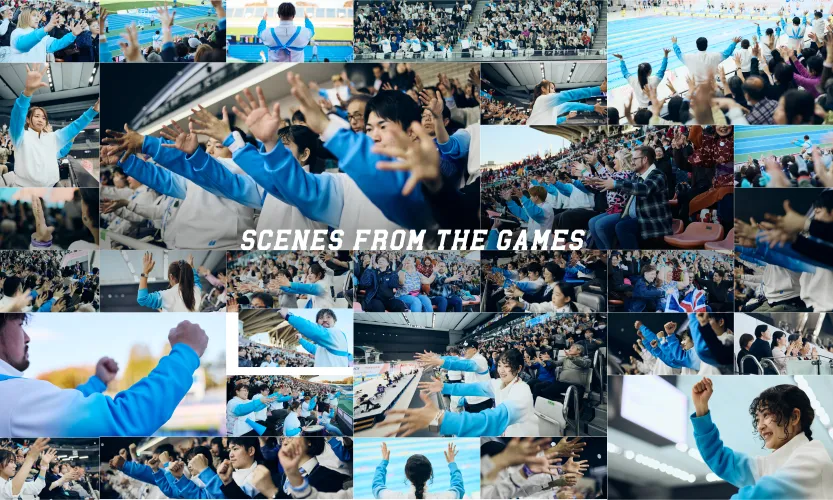
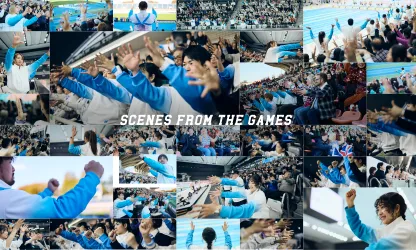
Deaf and hearing people came together as one team, spreading Cheer Signs across Japan through nearly two years of live demonstrations, enabling audiences to easily deliver encouragement and emotion to Deaf athletes.
Cheer Signs became more than a form of cheering. It evolved into a symbol of an inclusive society that connects Deaf and hearing people beyond the boundaries of sport.
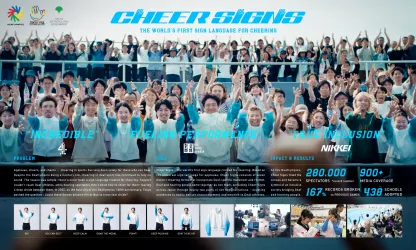
Awareness of the Deaflympics rose from 14.8% in 2023 to 73.1% in 2025, while attendance reached a record 280,000, the highest in the Games’ 100-year history.
Cheering became a driving force, resulting in 167% of the previous Games’ records.
The movement generated over 900 media reports across Japan and gained support from deaf athletes worldwide.
Cheer Signs is now used in 438 schools as an inclusion-learning tool and is being considered as an official cheering system for the 2027 Winter Deaflympics in Austria.
Credits
To see entry credits,
create an account
or
log in.
Logging in grants access to Advanced Search and more Entry Details.
Duplicate statues available now
Buy a Statue in
Experiential/Activation
to Celebrate Your Team
Related Winners

Silver
Clio Sports
Mastercard x MLSE
Canada
2026
Entrant Company
Maple Leaf Sports & Entertainment
Medium Type
Professional
Medium
Gameday Fan Experience
Category
Use of Partner or Sponsor
Launch Country
Canada
Entrant Company
Chicago White Sox
Medium Type
Professional
Medium
Gameday Fan Experience
Category
Theme Night
Launch Country
United States
Entrant Company
Wieden+Kennedy SP
Medium Type
Professional
Medium
Partnerships & Sponsorships
Category
Brand x Sports Property/Rights Holder
Launch Country
Brazil
Super Bowl
by Christine Champagne
by Christine Champagne
Behind the Scenes
by Christine Champagne
by Christine Champagne
Musings
by Dalia Burde
by Dalia Burde
Sports
by Shahnaz Mahmud
by Shahnaz Mahmud