
Bronze
Award
Smart Eye Camera
OUI Inc.
Japan
2026
Share:


To see entry media,
create an account
or
log in.
Logging in grants access to Advanced Search
and more Entry Details.
Entrant Company
TBWA HAKUHODO
Entry Type
Business to Business
Launch Country
Japan
Program
Clio Awards 2026
Medium Type
Professional
Medium
Digital/Mobile
Category
Emerging Technology
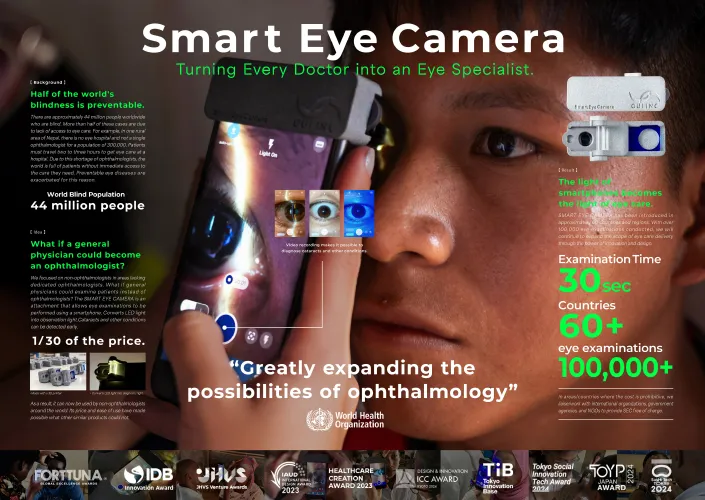
The world's blind population is currently 44 million, and it is estimated that this will increase to 120 million in 30 years' time in 2050.
More than half of these patients are blinded by preventable, treatable conditions due to lack of access to adequate eye care.
For example, in emerging countries, the number of ophthalmologists is often very low compared to the local population.
(Mozambique: 30 ophthalmologists for a population of approximately 30 million. Malawi: 14 ophthalmologists for a population of approximately 18 million.)
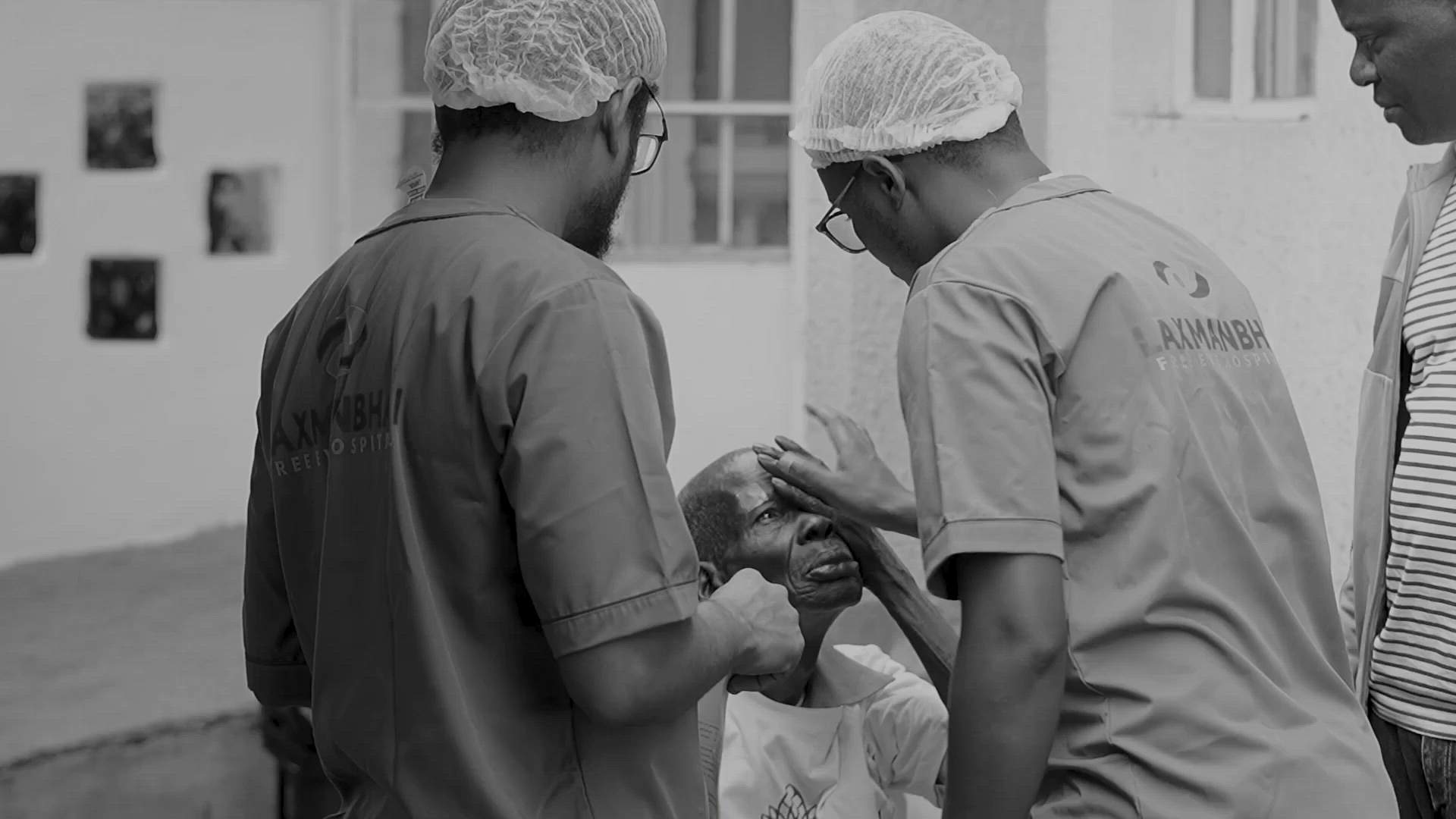
In areas where there are no nearby ophthalmologists, patients must travel for hours along routes with underdeveloped transport networks to get to a hospital.
Yes, ophthalmologists were too far away for them.
In areas where eye care is underserved, we noticed something.
That is, although there are no ophthalmologists available to patients, there are doctors.
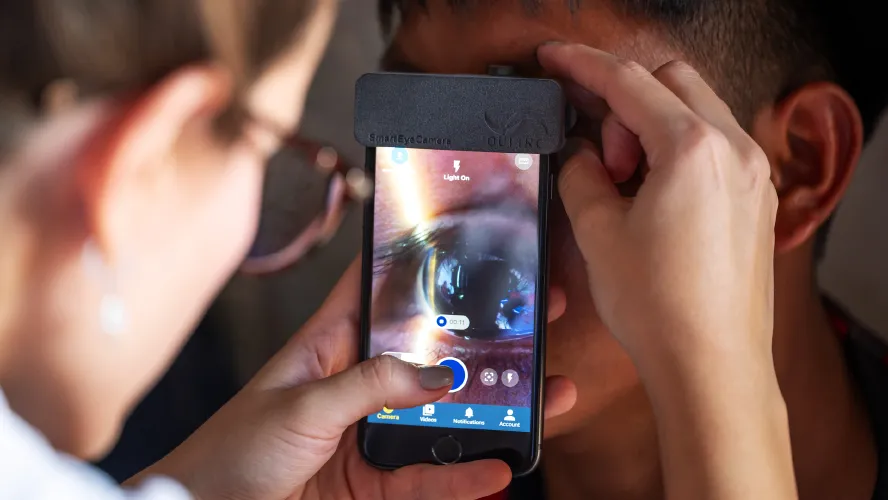
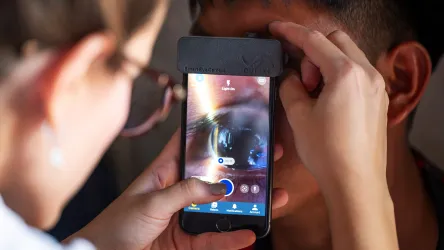
What if those doctors could become ophthalmologists? Could the global shortage of ophthalmologists be resolved? What we developed is the Smart Eye Camera.
It is an attachment that allows you to easily undergo eye examinations simply by attaching it to your smartphone. Converts LED light into diagnostic light to photograph patient's eyes.
Realizing the goal of "Turning Every Doctor into Eye Specialist"
Innovative Points of the Smart Eye Camera
Differences from medical devices
The Smart Eye Camera has a simple design that allows it to be manufactured using a 3D printer, making it inexpensive at 1/30 the price of medical equipment.
(The average price of a slit lamp microscope is $40,000.) On the other hand, it provides detailed examinations on a par with full-fledged medical equipment, allowing it to check for diseases such as cataracts.
Differences from similar products for smartphones
The Smart Eye Camera provides an intuitive user interface.
Furthermore, non-verbal tutorial videos make training sessions unnecessary.
This makes it easy for non-ophthalmologists around the world, even those who speak different languages, to conduct eye examinations.
With its low price and in-depth examination capabilities, the Smart Eye Camera has achieved a breakthrough that similar products have not been able to achieve.
Smart Eye Cameras have been introduced in approximately 60 countries and regions
Over 100,000 tests conducted
Received domestic and international healthcare awards
Patent income
Credits
To see entry credits,
create an account
or
log in.
Logging in grants access to Advanced Search and more Entry Details.
Duplicate statues available now
Buy a Statue in
Digital/Mobile
to Celebrate Your Team

Related Winners


Entrant Company
BETC
Medium Type
Professional
Medium
Audio
Category
Behavior Driven Messaging
Launch Country
France

Entrant Company
BBH
Medium Type
Professional
Medium
Creative Disruption
Category
Experience/Activation
Launch Country
United Kingdom
Entrant Company
BBH
Medium Type
Professional
Medium
Creative Disruption
Category
Branded Entertainment & Content
Launch Country
United Kingdom

Clio Awards
by Nicole Purcell
by Nicole Purcell

Ad of the Week
by David Gianatasio
by David Gianatasio

Fashion and Beauty
by David Gianatasio
by David Gianatasio

Fashion and Beauty
by David Gianatasio
by David Gianatasio