Bronze
Award
Invisible
Safehaven Toronto
Canada
2026
Share:


To see entry media,
create an account
or
log in.
Logging in grants access to Advanced Search
and more Entry Details.
Entrant Company
The Local Collective
Launch Country
Canada
Program
Clio Health 2026
Program
Traditional Mediums
Advertiser Category
Health Awareness & Advocacy
Medium
Film
Category
31 Seconds to 60 Seconds
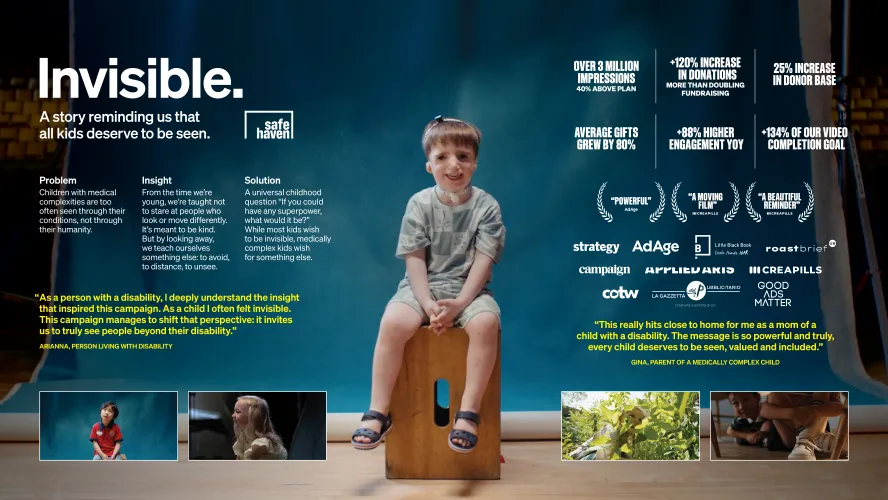
Safehaven is a Toronto-based not-for-profit that gives medically complex children the chance to live as kids, full of joy, imagination, and connection, rather than being defined by their diagnoses.
The challenge was not awareness alone, but a learned behaviour. From a young age, we are taught not to stare at people who look or move differently. Intended as kindness, this instinct creates distance. Over time, it conditions us to look away, leaving medically complex children unseen in everyday life.
We also knew the work could not rely on pity. To create real connection, the story needed to feel familiar.
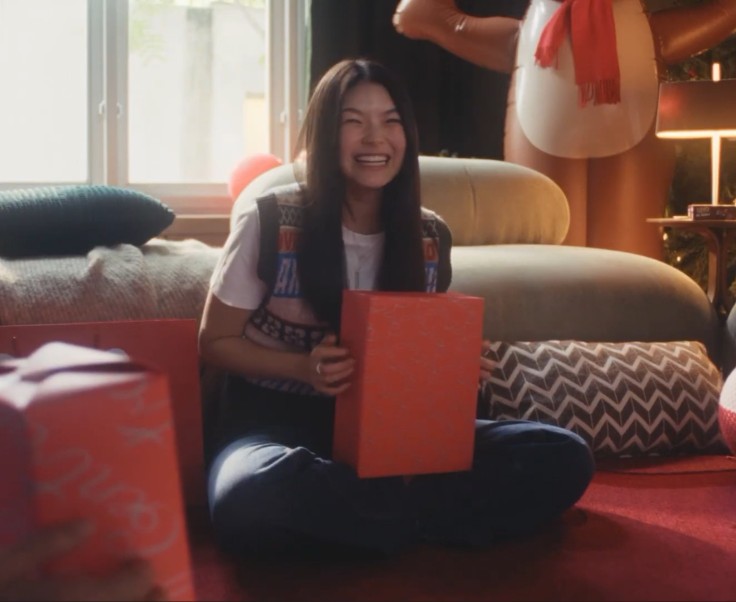
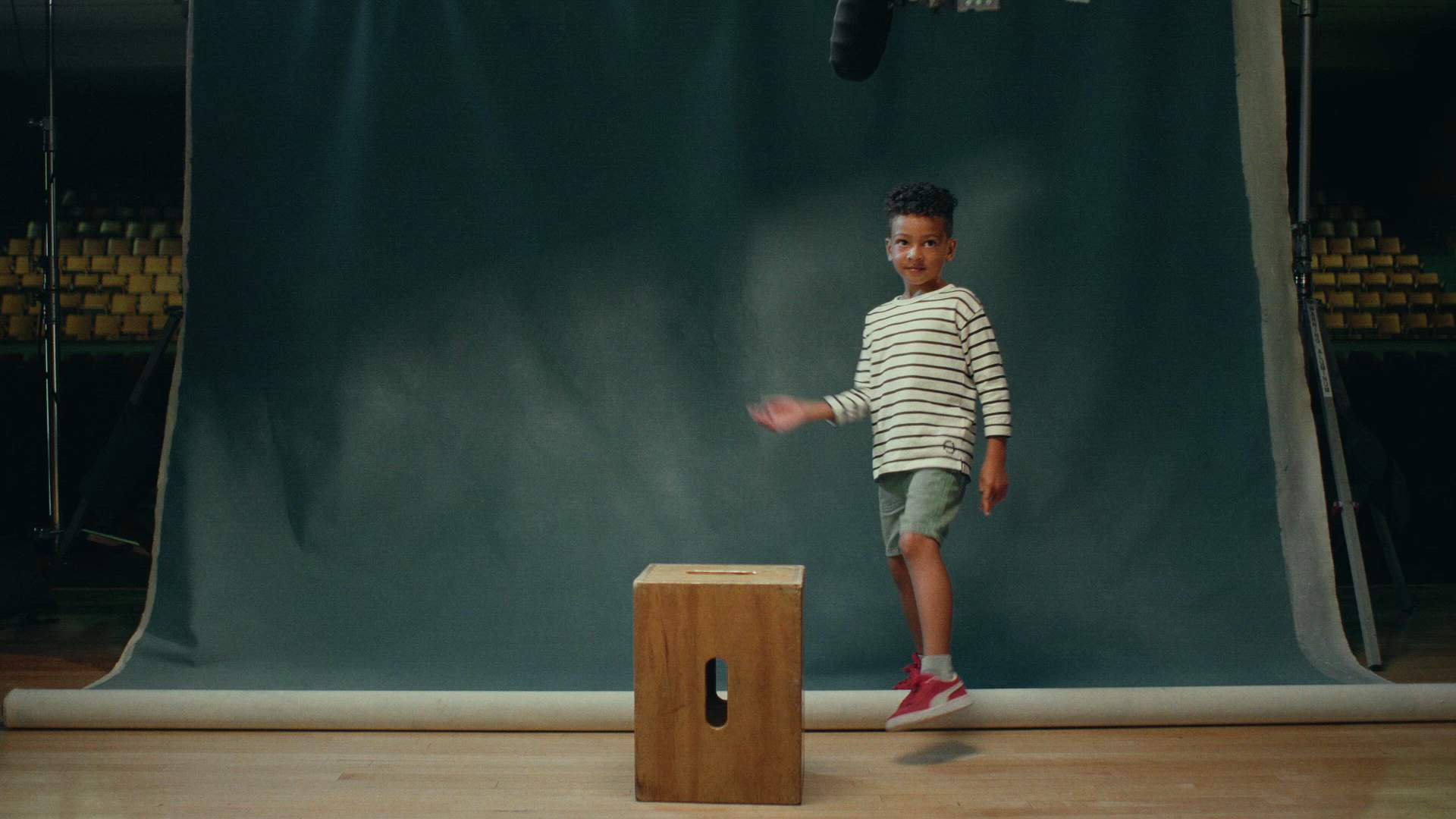
The creative strategy was to anchor the idea in a universal childhood truth. The film opens with a simple question: “If you had a superpower, what would it be?” Children imagine invisibility through playful, recognisable moments, building a sense of shared experience.
Then we meet Oliver, a medically complex child whose answer reframes the story. He does not want to disappear. He wants to be seen.
That contrast carries the idea. It transforms a familiar fantasy into a reflection of a learned behaviour, without ever needing to explain it.
The entire film depended on finding a child who could hold both the emotional weight and the lightness of the story. We needed someone verbal, expressive, and grounded in the honesty of childhood.
When we met Oliver, we knew we had found the heart of the film. His presence is effortless, his delivery natural, allowing the idea to land without performance.
The creative process was built around authenticity. Multiple formats, from camcorder to film to digital, were used to create a sense of memory and immediacy, allowing the story to feel both nostalgic and present.
This approach ensured the film felt lived rather than constructed. By grounding the idea in a shared childhood experience and resolving it through a single, powerful perspective, the work makes invisibility visible, and invites the audience to reconsider what it means to truly see someone.
Credits
To see entry credits,
create an account
or
log in.
Logging in grants access to Advanced Search and more Entry Details.
Duplicate statues available now
Buy a Statue in
Film
to Celebrate Your Team

Related Winners

Entrant Company
TBWA Singapore
Traditional Mediums
Advertiser Category
Health Institutions & Services
Medium
Out of Home
Launch Country
Singapore

Entrant Company
AREA 23
Traditional Mediums
Advertiser Category
Pharmaceutical
Medium
Partnerships & Collaborations
Launch Country
United States
Entrant Company
Tombras Group
Traditional Mediums
Advertiser Category
Consumer Brand Health Initiative
Medium
Out of Home
Launch Country
Argentina
Health and Wellness
by David Gianatasio
by David Gianatasio
Health and Wellness
by David Gianatasio
by David Gianatasio
Environment
by David Gianatasio
by David Gianatasio

2 Minutes With
by Shahnaz Mahmud
by Shahnaz Mahmud